Lex
By: Dream Chimney
The following interview was conducted on November 4, 2026
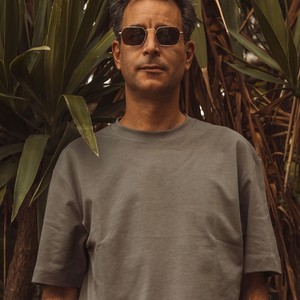 Lab '94 is more than a new release from Greek producer and DJ, Lex. It's a reflection on the places, people and experiences that helped shape his musical identity. Rooted in memories of the iconic Lab stage at Athens' legendary Alsos Club, the EP draws together decades of dancefloor culture, record collecting, live musicianship and a deep love for house music's foundations, while never feeling trapped by nostalgia.
In this interview, Lex looks back on formative years spent behind the counter of Athens institution Radical Soundz, explores the lasting influence of Berlin's early 2000s club scene, and discusses the value of spontaneity, Soundz, explores the lasting influence of Berlin's early 2000s club scene, and discusses the value of spontaneity, collaboration and human touch in electronic music. From Chicago house and cosmic disco to jazz, soul and Mediterranean grooves, he reflects on the influences that continue to shape his sound and why curiosity remains the driving force behind everything he creates.
Lab '94 is rooted in memories of the Lab stage at Athens' legendary Alsos Club. What made that place so special, and what remains with you from that era today?
Alsos was incredibly special to me because it was actually the first club where I experienced underground electronic music. It was a real revelation, almost a shock to the system. I remember being exposed to sounds and a whole musical world that I hadn't experienced before, and it completely opened my mind. The Lab stage became a very important part of that experience, and looking back, I realise how much those early nights shaped my musical direction. I still carry that feeling of discovery with me today.
The EP feels heavily informed by house music's foundations, but never nostalgic. How do you balance honouring the genre's history while keeping your music fresh and personal?
I don't really approach music with the intention of recreating a certain sound or thinking of a particular period. Those influences are naturally there because that's the music I've grown up with and spent so many years listening to and playing. I want my music to feel connected to the music I love, but at the same time have its own character and hopefully still make sense ten or fifteen years from now.
You've described yourself as a student of the dancefloor. After more than two decades immersed in club culture, what lessons are you still learning?
Actually, I've been on dancefloors for more than 30 years, and honestly, I can't imagine making music without having experienced the dancefloor first. It's so important to me. It's where I learned about grooves, energy, timing and how music can connect people. Of course, you never stop learning. Every crowd, every club and every night can teach you something different. I think that connection with the dancefloor is something I'll always need, both as a DJ and as a producer.
You often favour live instrumentation and improvisation over rigid programming. What does that human element bring to your productions that software alone cannot?
For me, it's about imperfections, physical elements, real performances and little details that give music a personality. When you play something rather than program every single note, you naturally introduce small variations in timing, dynamics and feel. Sometimes you get something unexpected that you wouldn't have thought of if you were drawing everything into a piano roll. I use plenty of software, of course, but I don't want the production to feel too calculated. I like things that breathe, things that move slightly differently every time you listen.
The EP moves between Chicago house influences, Mediterranean warmth, jazz touches and cosmic Italian sounds. Do these references emerge consciously, or are they simply part of your musical DNA at this point?
I think they're just part of my musical vocabulary by now. I've listened to so many different kinds of music over the years that it's difficult to separate one influence from another. I might start with a particular groove or a bassline and end up somewhere completely different. I'm not sitting in the studio thinking that I need a Chicago element or something jazzy, etc. These things come out naturally. Sometimes I only recognise where an influence comes from after the track is finished.
Athens has developed a strong underground identity over the years. How has the city shaped your musical outlook and approach to DJing?
Athens has always had its own character. It's a city where different musical cultures and influences have crossed paths, and I think that creates an interesting environment. My relationship with the city has also changed over the years, from running a record shop to organising parties and playing in different clubs. It's taught me to be open-minded and not to follow a particular formula.
Before many people knew you as a producer, you ran Radical Soundz, one of Athens' most influential record stores. Looking back, how much of your musical education happened behind that counter?
A huge amount. In many ways, it was a daily music education. You were constantly discovering records, talking to people, listening to different opinions and being exposed to music you might never have come across otherwise. The interesting thing about running a record shop is that you don't only learn from the records you personally love. You also learn from what other people are looking for, what excites them and what connects with them. It was an incredibly valuable period, and I think it helped develop my ears in a way that would have been difficult to achieve otherwise.
Running a record store gives you a very different perspective on dance music culture. Did that experience influence your creative instincts as a producer?
Definitely, especially when it comes to understanding what makes a record interesting beyond its immediate impact. When you spend years listening to records in a shop, you start paying attention to details: the way a track develops, unusual arrangements, unexpected sounds and little production tricks. You also become less attached to genres because you're constantly moving between different ones. I think that experience made me more curious as a producer and encouraged me not to take the obvious route.
You've witnessed huge changes in club culture since the early 2000s. What aspects of underground dance music have improved, and what do you think we've lost along the way?
I've been part of this culture since the 90s, so I've had the chance to witness some pretty big changes over the years. There's obviously much greater access to music today, and that's a positive thing. Artists can release music independently, reach audiences around the world and connect with people much more easily. But I sometimes miss the slower process of discovering music. Back then, finding a particular record could take weeks or months, and when you finally got hold of it, it meant something. There was also a different relationship between DJs and music. You spent time with records, got to know them and developed your own way of playing them. Today, everything moves so quickly. I wouldn't say things were necessarily better before, but I do think we've lost a little of that anticipation and excitement of discovering something new.
Boot Slap has been part of your creative journey for many years. What makes the partnership work so well, both musically and personally?
Actually, these are the first tracks we've made together, although we've tried a few times in the past. We've been friends for a long time, so there's already a natural understanding between us. One of the things I love about working with Boot Slap is that we never actually plan to go into the studio and make music. It always happens spontaneously. We might just be hanging out at my place or somewhere else where we happen to have the possibility to record, and suddenly we start messing around with ideas. There's never any pressure or a particular plan. I think that's what makes it so much fun and keeps things natural.
Friday To Monday is inspired by your shared experiences in Berlin's early 2000s club scene. What memories immediately come to mind when you hear that track now?
It takes me back to a period when weekends felt almost endless. Berlin had, and still has, an incredible energy and freedom, especially when it came to nightlife. This sense of freedom, the very little pressure to follow a schedule, and all these interesting people coming together through music is what I remember the most. The track isn't intended to document a particular night, it's more about capturing that state of mind.
House music often celebrates simplicity, yet simplicity can be difficult to achieve. How do you decide when a track has enough elements and when it's time to stop adding more?
That's probably one of the hardest parts of producing. At some point, you have to step back and listen to the bigger picture. If an element isn't adding anything meaningful, it probably doesn't need to be there. I also think repetition is important in dance music, but repetition doesn't mean that nothing should happen. It's about finding small changes that keep the listener interested without disturbing the groove. Knowing when to leave something alone is a skill I'm still working on.
Your collaboration with DJ Rocca on Back To Mad (Cosmic Version) explores a distinctly cosmic and Italo-influenced direction. What first connected the two of you creatively, and what have you learned from working together over the years?
Luca and I share a very broad musical background, and I think that's what initially brought us together creatively. We both appreciate strong grooves and records that don't necessarily fit into one category. He's also someone with a very distinctive musical personality, a great musical instinct and a very open-minded approach. Over the years, I've learned that collaboration works best when you don't try to control every aspect of the process. You bring your ideas to the table, the other person brings theirs, and something different emerges. That's what makes it worthwhile.
Across your catalogue, there's a warmth and soulfulness that feels consistent regardless of whether you're making disco, house or techno. Is that a conscious signature, or simply the music you're naturally drawn towards?
I think it's more instinctive than intentional. I've never really been interested in making music that sounds cold or overly mechanical, even when I'm working with more electronic or club-oriented sounds. I like having physical elements in my productions, whether it's live instruments, played parts or sounds that have a more organic feel to them. Most of the time, that human touch comes from working with musicians and having someone actually play an instrument rather than creating everything on a computer. I suppose that's the common thing throughout my productions. The genre can change, the tempo can change, but I still want the music to have some kind of soul.
Looking back at your journey from record store owner to internationally recognised DJ and producer, what has remained unchanged about your relationship with music?
The curiosity, probably. I'm still excited when I discover a great record. I still listen to music constantly, and I still get the same satisfaction from finding an interesting groove or putting together a DJ set that takes an unexpected direction. The circumstances have changed, and I've experienced different sides of the industry, but the actual reason I started doing this hasn't really changed. I simply love music, and I still enjoy being involved in it.
Check out the latest release from Lex.