David Schwartz
By: Dream Chimney
The following interview was conducted on June 17, 2026
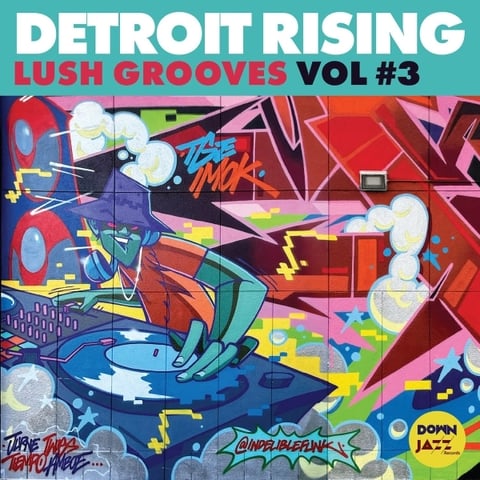 For David Schwartz, founder of DownJazz Records, home has always been a sanctuary built from rhythm, memory, and the glow of well-worn vinyl. Long before Lush Grooves became a three-volume journey through neo-soul-jazz and dancefloor futurism, David was a kid in New York glued to WRVR, absorbing the spiritual jazz, fusion, and Brazilian rhythms that would shape his life. His living room today carries that same energy — a space where vintage Roy Ayers LPs sit beside broken-beat 12"s, and where the NYC–Detroit axis hums quietly in the background. For Everyone Back To Mine, David opens the door to the records, influences, and late-night listening rituals that continue to guide his creative world.
 What core principles guide DownJazz as a label, and how do those values manifest in the Lush Grooves trilogy?
Live musicianship and experience matter. Working with high-calibre touring musicians who studied music. DJ/producers who excel at working a dancefloor and then creating dance tracks that do the same. Quality at every stage — playing, writing, composing, engineering, and mastering.
How do you balance reverence for 70s soul jazz pioneers with the desire to push their ideas into contemporary club culture?
I happen to love both old and new. Soulful sounds from the past are eternal. Young creative energy is exciting. Together they fuse into something familiar but new.
What specific qualities in Mark Adams & The Ubiquity Band's performances made you think, "This can be reinterpreted in a completely new way”?
It started with the sound of Neo-Soul. Band members from Roy Ayers, Lonnie Liston Smith, and Gil Scott-Heron/Brian Jackson are truly skilled musicians. They can play anything from the past and into the future. They are teachers, composers, and artists who dream about new ideas. My job is to unlock this potential and let them try something new.
What does “reimagining” mean to you — is it preservation, transformation, or something in between?
My feeling is that good art is built on foundations and the artists who came before you, but then takes a leap in a whole new direction that reflects the current time or a near future.
The remixers come from London, Detroit, Amsterdam, Atlanta, and beyond. How intentional was the idea of creating a cross-continental dialogue?
Neo-Soul-Jazz was born in the US but, over time and through many interpretations, became a global sound. It was important to add other ideas, voices, and cultures to let global artists speak through their own vision.
When you listen to all three volumes as a single body of work, what emotional or narrative journey do you hear?
1970-2026. The sounds of jazz, soul, funk, and Motown flowing from past to present.
Selecting remixers by “musical DNA”, what elements of a producer's musical identity made them the right fit for this project?
Each remixer has a special affinity and skill set in the music of jazz and soul.
The original album features musicians who've played with Chaka Khan, Luther Vandross, Chic, and more. How did that level of musicianship influence the direction of the remixes?
A very high level of musicianship required equally skilled DJ/producers who understood and regularly played and produced these genres in their day-to-day DJ work.
Beyond geography, what cultural or spiritual connection do you see between these two cities that shaped the DownJazz sound?
Detroit and New York are both steeped in church music, with a strong understanding of jazz and blues musicianship.
When you curate a project like this, are you thinking about immediate impact, long-term legacy, or both?
Truthfully, it's about the near term with a hope for the future. The world is changing so fast that I have to be very much in the present and produce music for the current listener. Who knows how this will be heard in 20–50 years.
Were there any remixes that surprised you — versions that took the music somewhere you didn't anticipate?
Each remixer had a unique take that surprised me, from Jimpster’s haunting “Don’t Stop” dub mix to Makez creating a future spiritual-vibe track for “Open Letter.”
What does releasing all three volumes together say about DownJazz’s ambitions as a label?
Well, we pulled it off — and it wasn’t easy. That was a lot of work, time, energy, and resources. A lot of trial and error. We wanted to make a big statement because the musicians and the genre were so big, colourful, and frankly special.
Do you see the dancefloor as a place where musical history is preserved, or where it’s rewritten ?
Both. Trends move forward and come back around, but they’re always evolving. Jazz music and jazz-dance music, with new interpretations, are now back in vogue with young people worldwide.
Has the success of this project opened doors to new artists or catalogues you’re considering reworking ?
A great artist manager once told me a very important piece of advice: “Work leads to more work.” This is all about the process.
Where do you think the intersection of soul jazz, broken beat, and deep house is heading in the next few years ?
We’re all going to find out. I’m a bit scared but also excited to see where AI is taking us. We need to be open to change and new sounds. Be positive — younger people don’t seem fazed and are experimenting to create what comes next.
Check out the latest release from David Schwartz.