A-Eno-Acid
By: Dream Chimney
The following interview was conducted on October 21, 2026
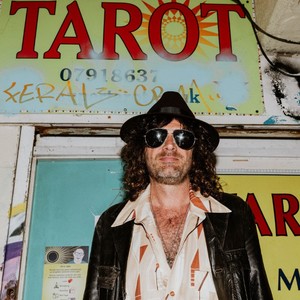 A-Eno-Acid is Mark Churcher, the Brighton producer behind Chicago Bee Records. His debut album under the name, The Last Jack, moves from late-1980s Chicago acid toward the early 1990s, each track a homage to an artist or a record he loves, made as if it might be the last acid LP he ever puts out.
The project follows a long gap. Churcher ran the mid-1990s label Emote, stepped away from new electronic music to train as a psychiatric nurse, and only started again after moving from Portsmouth to Brighton in 2014. Chicago Bee's first release landed in 2017. Here he talks about that return, a small studio split between Behringer, Eurorack and software, and why the closing track, "Eno Acid", takes the 303 off the dancefloor.
Hello Mark. For readers discovering A-Eno-Acid for the first time, could you tell us a little about your musical background and how this project came about?
Sure. I ran a label called Emote back in the mid-1990s, with releases under my own name, Mark Churcher, as well as V-Neck and Send/Return. It was ambient, abstract techno and dub techno-type stuff.
By 2000, my working relationship with the chap I collaborated with had become strained. I was increasingly disconnected from new music and went down a massive rabbit hole, listening to bands like Nurse With Wound and Throbbing Gristle. I also got into '60s free jazz, listening to groups like the Spontaneous Music Ensemble and AMM, as well as early electronic music by people like Stockhausen and Raymond Scott.
I kind of fell out of love with making new electronic music, as I became so engrossed in music that had been made decades earlier.
I was also embarking on my nurse training to become a psychiatric nurse and decided to concentrate all my efforts on that.
I fell into a routine of working hard and letting off steam at the weekends by going out drinking.
It wasn't until I moved from Portsmouth to Brighton in 2014 that I returned to making music.
I knew very few people in Brighton, so I returned to making music as a positive way to spend my time rather than just going to the pub.
In fear of sounding corny, making music is like therapy for me. I'd forgotten how much it helps me block out the things I want to block out of my head.
Furthermore, an old friend from Portsmouth, The Gasman, was putting out some old-sounding house music that I thought was fun. I'd got into acid house back in the '90s through listening to Detroit techno. I love joining up the dots.
So I simply got myself up and running again and started making acid house for my own enjoyment.
I then thought I'd just chance my arm and put something out. The first Chicago Bee release came out in 2017, a crazy 17 years after my last release.
To my surprise, it was well received, and I sold every copy.
It was only then that I discovered there was a thriving acid scene. I had no idea labels like Super Rhythm Trax and I Love Acid even existed. I'd also never heard of my now-distributor, Rub A Dub.
So, in a nutshell, Chicago Bee and A-Eno-Acid both came about simply from making music for myself as a hobby.
The Last Jack is an intriguing title for a first album under this name - it suggests an ending just as you're opening a new chapter. Where did the title come from, and what does the "last" refer to?
You got me!
I've been wanting to move in other directions. I find it hard to keep focused on any one genre of music, and I also don't want to repeat myself. However, not doing an A-Eno-Acid LP felt unfinished to me.
I put my heart and soul into this LP, approaching it as though it might be the last acid record I'll ever make, or even the last record I make at all, for that matter. I do have a habit of disappearing.
A lot of the tracks are actually homages to my favourite acid artists and individual acid tracks. I'm not sure I can, or want to, replicate that twice.
I've got a few ideas about how to follow it up with a twist and keep things fresh. Whether that materialises or not remains to be seen.
If it sells 100,000 there'll be a The Last Jack Vol. 2, LOL!
Late-1980s Chicago Acid is a central reference point for the record. What first drew you into that sound, and which qualities still matter most to you when making your own music? Is there a particular record that helps explain the attraction?
I like a lot of weird music, and I put acid house in that category. I've got some older friends who never really accepted acid house, but I do.
I like the more stripped-back stuff: acid that has no human reference or connection to conventional music. I liken it to punk. Just a 303 and a drum machine is a joy to hear when it's done well. That's the challenge for me: limiting myself to the same paintbrush, oils and canvas, but still trying to squeeze something out that's worth listening to.
Sorry to state the obvious, but I have to mention Acid Tracks by Phuture. I'll always be in awe of that record.
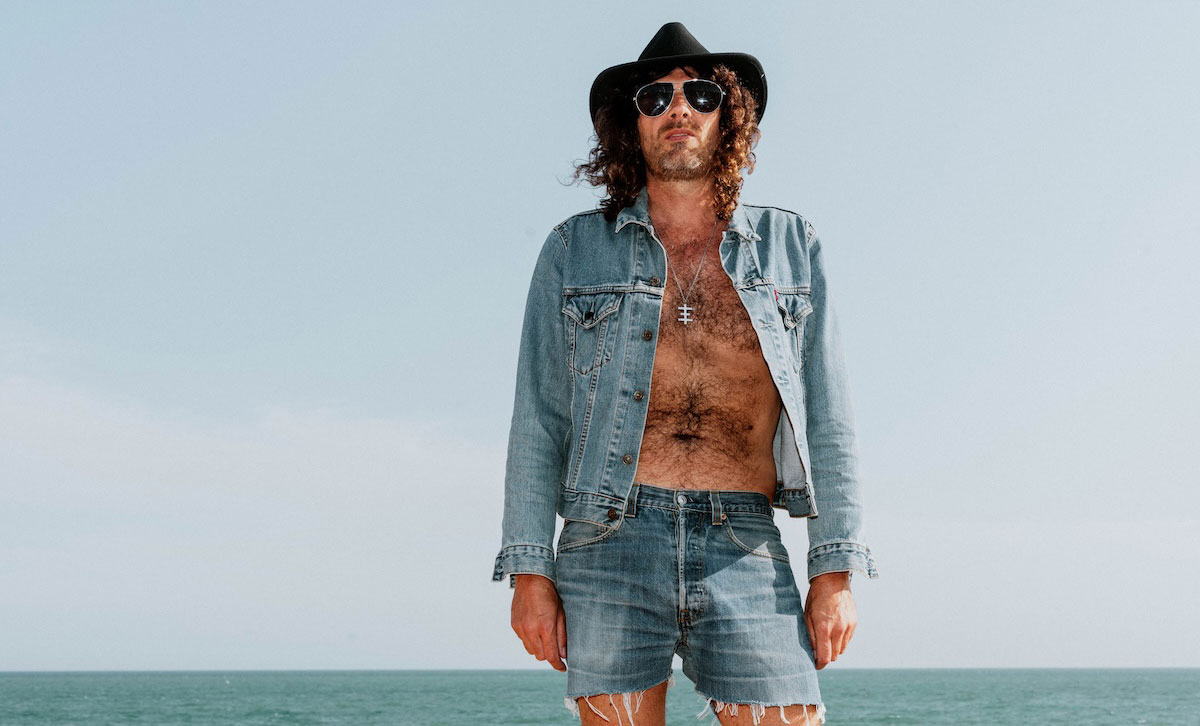
Could you walk us through the making of the record, from the first idea to the finished collection? What were you working with in the studio?
I sold all my kit back in 2000 and am still building my studio back up. What I most regret selling was an ARP Odyssey. God knows how much that's worth now.
My setup is still small. I'm roughly 50% hardware and 50% software.
I use Behringer gear because I can't afford the originals, along with a few Eurorack modular bits.
The idea for the album has a loose time-travelling concept to it. The LP starts out sounding like it's set around 1986 and finishes in the early '90s. That's basically my favourite period for this music. As I mentioned, each track also has either an artist or an individual track in mind.
Alongside your Acid productions, you DJ funk and other sounds. Is there a connection between your nights and the album track "The Bee's Mouth"? More broadly, what does playing funk teach you about making a machine-driven groove feel alive?
Ha, you've done your research! That's a tricky one.
The Bee's Mouth is one of the venues I play at regularly in Brighton. It's a fantastic bar with an unusual, original name. My friend Ryan (Several Wives) has a permanent video installation in there. It just seemed to fit to use the name for that particular track, in my head anyway.
I'm not sure what playing funk out teaches me about making machine-driven music. However, what I've found over the years is that listening to music far removed from the music I make can actually be surprisingly inspiring.
You describe much of the album as quite dark, while titles such as "America Wake Up" and "I Believe In Music" suggest different kinds of statements. What's behind those names, and how much of life outside the studio finds its way into the music?
I like music that can send your mind off on a tangent, so you end up listening to it almost subliminally, with the imagery in your mind taking over. That's what I got from "America Wake Up". It made me think about what America is up to right now, as well as its historical activities involving the CIA. Makes me wander who the actual terrorists are in this world.
I guess we're always influenced by the outside world to a degree, whether we like it or not. I try to keep away from current politics and the news because I find it too depressing. But I love the history of politics.
"I Believe in Music" is actually the title of a book written by Ikutaro Kakehashi, the founder of the Roland Corporation. In the book, he talks about his life experiences and his thoughts on the future of electronic music.
You've described some of the later tracks as leaning towards early-1990s Detroit. How did you work out the running order, and what did you want that shift to do for someone listening to the album from beginning to end?
As mentioned, the LP is a loose conceptual album, taking you from the beginnings of acid house through to the early '90s. It's my favourite period for this music.
I thought a full-on acid LP from start to finish would be too hard to maintain attention with. I deliberately wanted to mix things up.
For Chicago Bee's Home Listening Acid and House compilation, you asked artists to emphasise emotion and melody, with a 303 welcomed but not essential. Did hearing how other producers approached that brief change what you wanted from your own music? What carried over into this album?
That was a really fun project, and I'm still amazed at how I managed to get so many great artists together and willing to take part. I feel that compilation is going to stand the test of time.
Some artists got it instantly. Others were open to me suggesting subtle changes to their tracks to ensure they fitted the brief. I also had to turn down some great tracks because they didn't quite hit it.
I hadn't thought about it like that, but I guess working with those artists in that way did help me tailor my own skills when it comes to hitting a brief. In my head, this was certainly needed for the current LP. The difference is that it's just me doing all the work this time.
Chicago Bee has a clear commitment to vintage-sounding Acid and House on vinyl. What makes those sounds so important to you?
Short answer: nostalgia. I went to my first rave in 1990 called Raindance in Barking London. I was only 16 but I caught the tail end of acid house. This music evokes memories of what clubbing was like back then and sparks my imagination about what the scene would have been like a few years earlier, when I was too young to experience it.
I lived in a small town near Southampton. This was pre-internet, so if you were inquisitive, you had to travel into the city to find records and check out the latest fashions. We'd also record pirate radio stations on a ghetto blaster while in London.
I love all things vintage, and I love the physical experience of going to record shops.
You finish with "Eno Acid", taking the 303 into ambient territory. What interests you about the instrument when it isn't being asked to drive a dancefloor, and why did that feel like the right way to leave the listener?
As is well documented, the TB-303 was intended as a replacement for a bass player in a conventional band. It completely flopped at achieving this. However, it found a home when paired with a drum machine.
I love the hypnotic, danceable feeling you get when you pair the two together. That said, why not try taking an instrument outside its normal habitat?
I've been working on a lot of beatless ambient soundscapes. I've been playing around with using the TB-303 in a different way and running it through a lot of guitar pedals. So the last track is possibly a taste of things to come.
Check out the latest release from A-Eno-Acid.